Beach Club Between Desert and Sea.
-
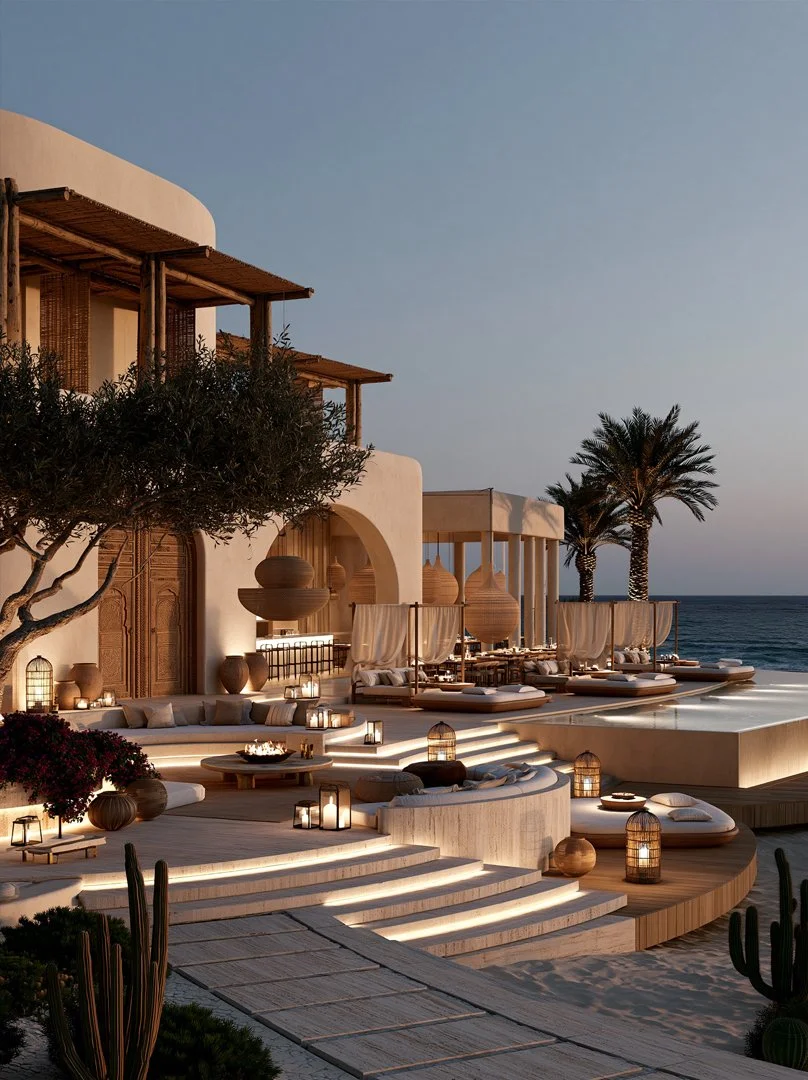
Set along Jumeirah Beach, this coastal retreat brings together the artisanal character of Morocco, the elemental warmth of Africa and the relaxed spirit of the Mediterranean. Rather than competing with Dubai’s dramatic shoreline, the beach club settles gently into the landscape as a series of sculpted volumes, shaded terraces and reflective pools.
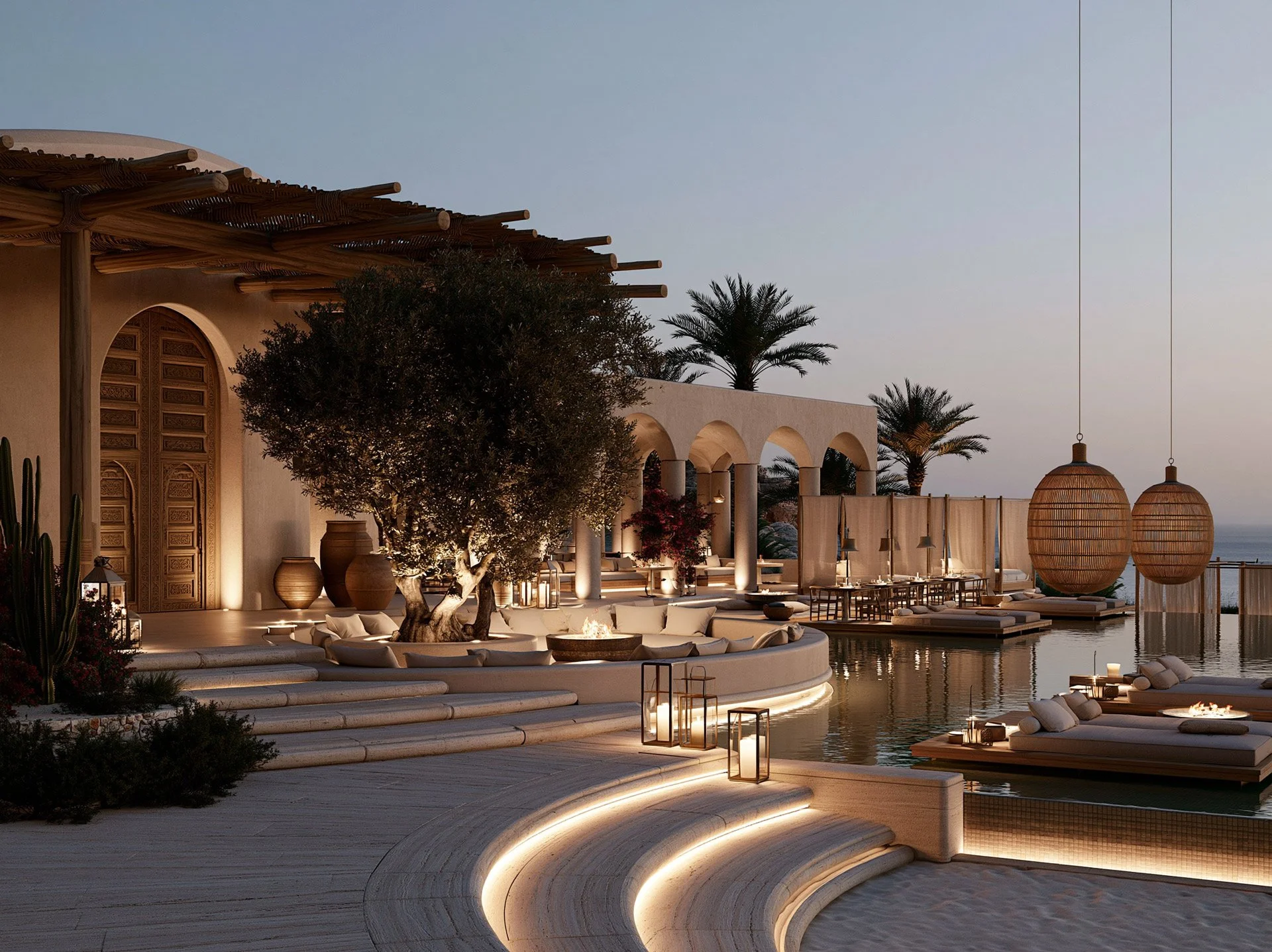
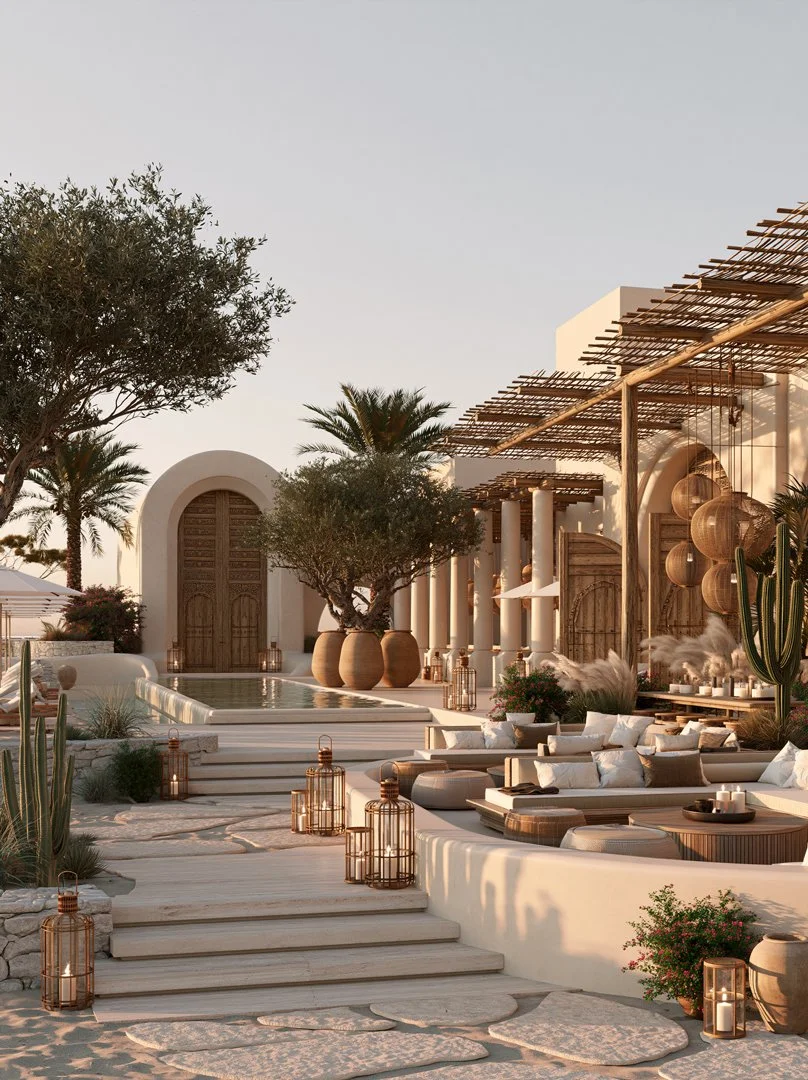
The architecture is conceived as a low, layered coastal settlement. Softly curved walls finished in warm white lime plaster are punctuated by deep arches, colonnades and monumental carved timber doors. These solid, protective forms are balanced by open pergolas constructed from weathered timber and woven reeds, filtering the intense sunlight and casting constantly changing patterns across the terraces below.
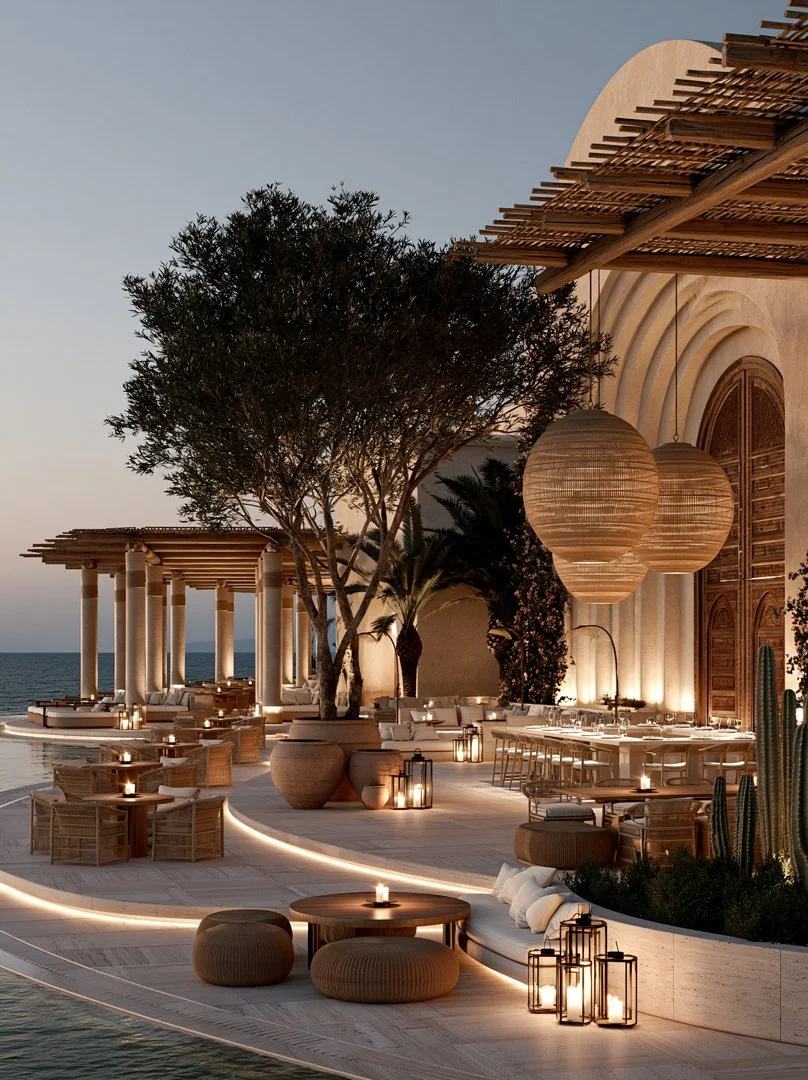
Movement through the club unfolds gradually. Broad curved steps descend towards the sea, connecting restaurants, bars, sunken lounges and private cabanas. Framed views of the Arabian Gulf appear between columns, olive branches and softly moving linen curtains. Pools weave through the terraces as organic lagoons and reflective channels, visually merging the architecture with the coastline. Timber daybeds appear to float above the water, while circular seating areas and fire bowls form intimate spaces for gathering.
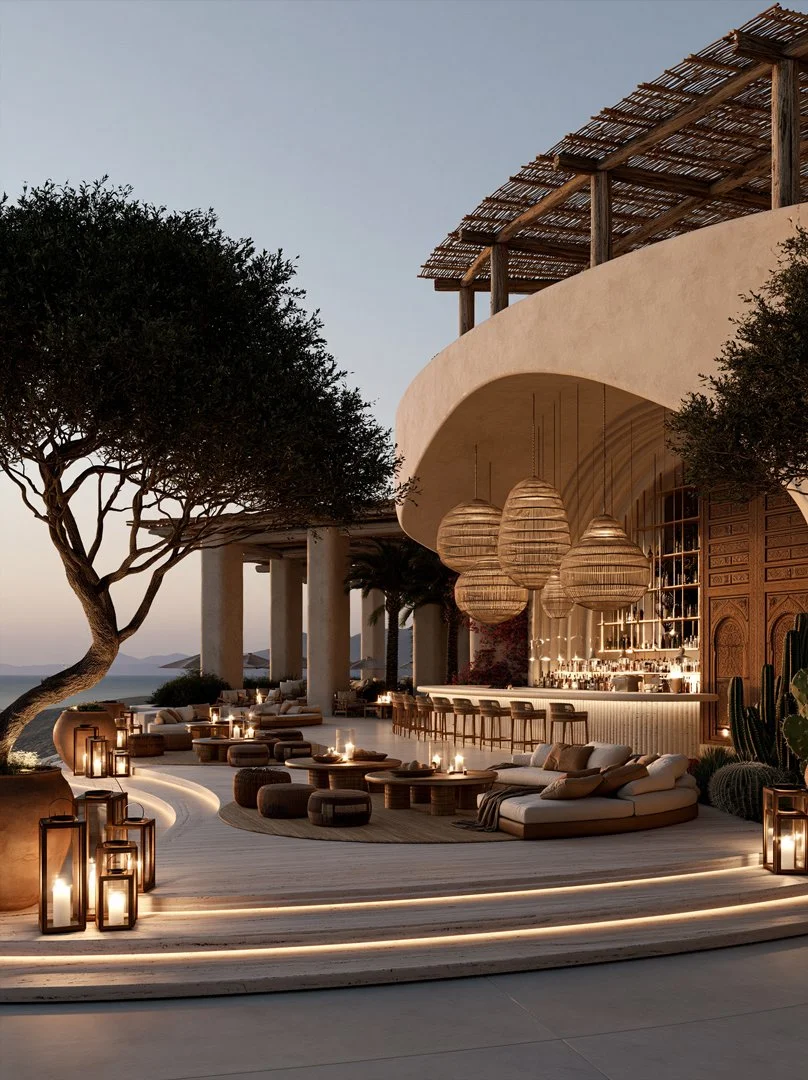
Inside, the palette remains restrained and tactile. Textured lime plaster, pale limestone, travertine, weathered timber, woven cane, natural linen and hand-finished leather create an atmosphere that feels refined without becoming formal. Colours are drawn from the surrounding landscape: ivory, sand, clay, camel and tobacco brown.
Furniture is generous and low-slung, encouraging an informal rhythm of dining and relaxation. Curved banquettes follow the architecture, while handcrafted timber tables, woven chairs and oversized daybeds soften the transition between interior and exterior. Large basket-like pendant lights hang beneath the pergolas, bringing warmth, scale and a distinctly African artisanal quality to the social spaces.
Moroccan influences appear through carved doors, rhythmic arcades and shaded transitional courtyards, while the Mediterranean character is expressed through limewashed surfaces, olive trees, bougainvillea and open-air living. Rather than reproducing a single historic style, these references are simplified and reinterpreted through a contemporary architectural language.
The landscape extends this narrative. Mature olive trees, date palms, bougainvillea, cacti, agave and ornamental grasses create a garden that feels both Mediterranean and desert-adapted. Oversized terracotta vessels are positioned as sculptural objects, while irregular stone pathways gradually dissolve into the sand.
As evening approaches, concealed lighting traces the curves of steps, pools and terraces. Lanterns, candles and open fires cast a warm amber glow across the pale architecture, while reflections shimmer over the water. The result is a beach club defined not by overt opulence, but by atmosphere, craftsmanship and a carefully choreographed relationship with the sea—a contemporary sanctuary suspended between desert and coast.